The Ultimate Guide to Group Health Insurance for Florida Small Businesses
Choosing the right health insurance plan for your employees is one of the most important decisions you can make as a business owner. A well-designed group health insurance plan can help you attract qualified employees, improve retention, strengthen your company culture, and provide financial protection for the people who help your business succeed.
For many employers, however, the process can feel overwhelming. Questions about eligibility, plan types, premiums, deductibles, provider networks, and enrollment often make it difficult to know where to begin.
This guide is designed to simplify the process. Whether you’re considering offering health insurance for the first time or reviewing your current employee benefits, you’ll learn how group health insurance works, what it typically covers, who qualifies, and how to choose a plan that supports both your business goals and your employees’ healthcare needs.
If you’re a business owner in Florida, this resource will provide the knowledge you need to make informed decisions while avoiding many of the common mistakes employers encounter when selecting employee health coverage.
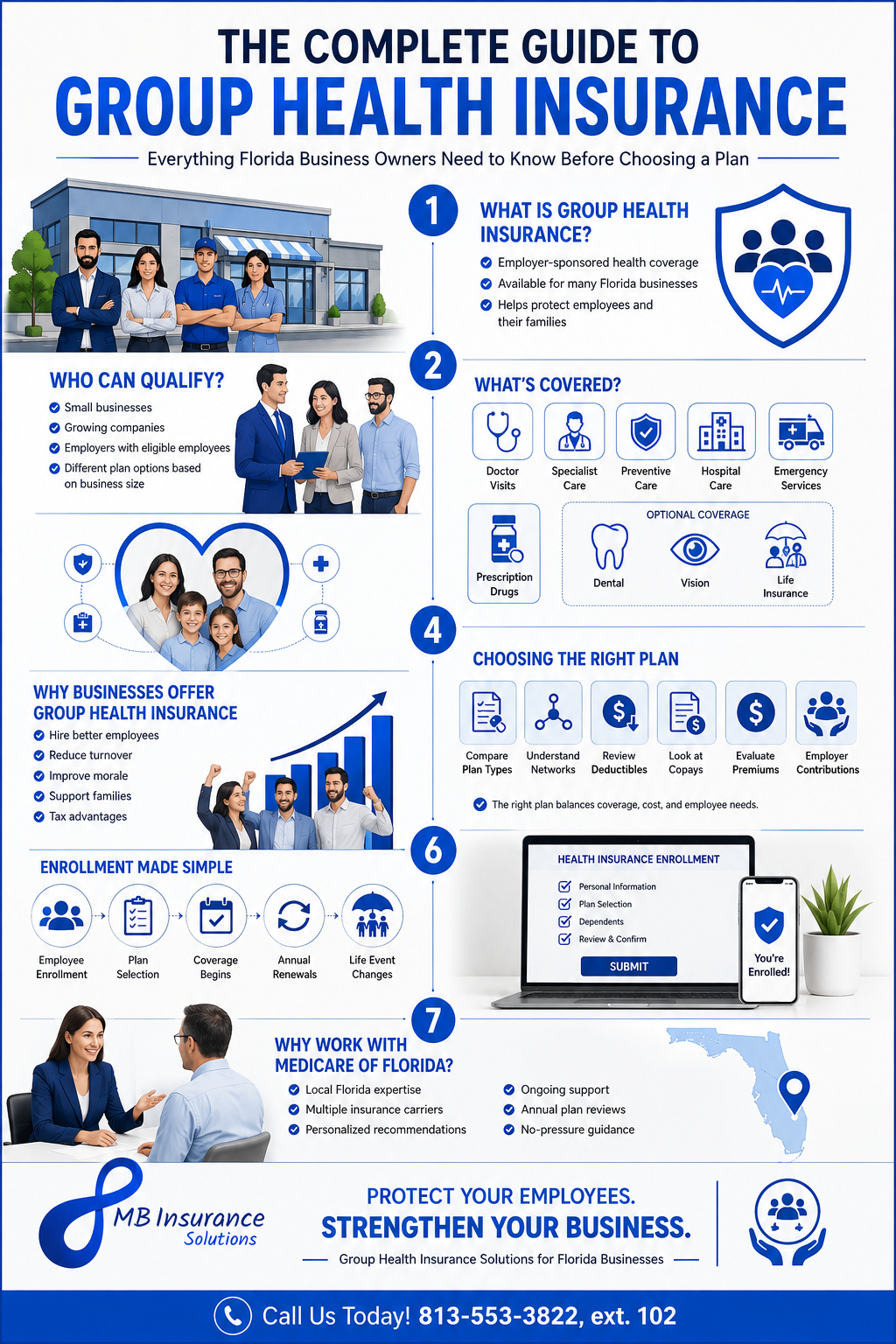
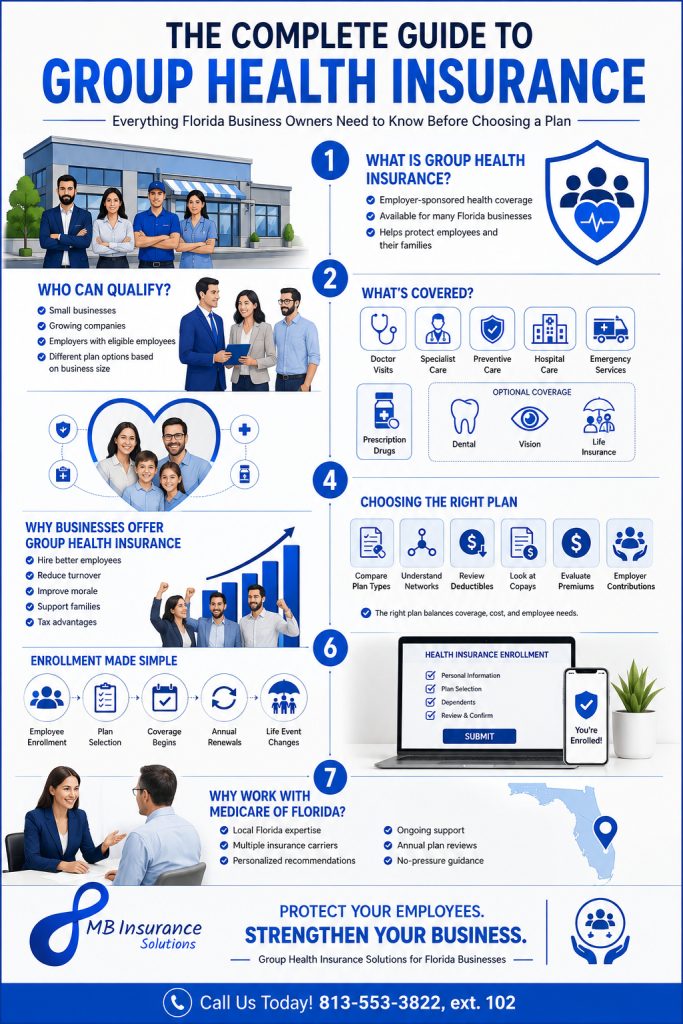
What Is Group Health Insurance?
Group health insurance is a health insurance policy purchased by an employer to provide medical coverage for eligible employees. In many cases, employees can also enroll their spouses and dependent children, allowing families to access healthcare through a single employer-sponsored plan.
Unlike individual health insurance, where each person purchases coverage independently, a group health plan allows multiple employees to participate under one policy. The employer generally contributes toward the monthly premium, while employees pay the remaining portion through payroll deductions.
Because the insurance company spreads risk across a larger group of people, group plans often provide competitive pricing and broader access to healthcare services compared to many individual policies.
Group health insurance has become one of the most valued employee benefits offered by businesses of all sizes. While large corporations have offered these plans for decades, today’s marketplace has made quality coverage more accessible for small and mid-sized businesses as well.
How Does Group Health Insurance Work?
Although every insurance carrier offers different plans, the overall process follows a similar structure.
The employer selects one or more health insurance plans that meet the company’s budget and employee needs. Eligible employees are then given the opportunity to enroll during the initial enrollment period or after qualifying life events.
Once enrolled, both the employer and employee typically contribute toward the monthly premium based on the company’s contribution strategy.
When employees need medical care, they simply use their health insurance according to the terms of their selected plan. Depending on the plan, they may pay deductibles, copayments, or coinsurance while the insurance company pays the remaining covered expenses.
For many businesses, offering group health insurance creates a predictable system that allows employees to access healthcare while helping employers manage benefit costs.
Who Can Benefit from Group Health Insurance?
Many business owners assume that group health insurance is only practical for large corporations. In reality, businesses across a wide range of industries can benefit from offering employee health coverage.
Common examples include:
✅ Construction companies
✅ HVAC and plumbing contractors
✅ Electrical contractors
✅ Roofing companies
✅ Medical and dental practices
✅ Home healthcare providers
✅ Restaurants and hospitality businesses
✅ Retail stores
✅ Professional offices
✅ Manufacturing companies
✅ Transportation and logistics businesses
✅ Landscaping companies
✅ Cleaning services
✅ Real estate firms
✅ Technology companies
Whether your business employs office professionals, skilled tradespeople, healthcare workers, or service technicians, offering health insurance can strengthen your overall compensation package.
Why Group Health Insurance Matters
Health insurance is more than an employee benefit—it can become an important part of your business strategy.
Today’s employees often compare benefit packages before accepting a position. Companies that provide healthcare coverage frequently gain an advantage when recruiting experienced professionals and retaining valuable team members.
Offering group health insurance may help your business:
- 👥 Attract qualified employees
- 🔁 Reduce employee turnover
- ❤️ Improve employee satisfaction
- 🏥 Encourage preventive healthcare
- 📈 Increase workplace productivity
- 🤝 Build long-term employee loyalty
- 💼 Strengthen your overall benefits package
For employees, health insurance can provide greater financial stability by helping reduce the cost of doctor visits, hospital care, prescription medications, and preventive services.
For employers, healthier employees often contribute to fewer missed workdays, improved morale, and a more stable workforce.
Who Can Qualify for Group Health Insurance?
Eligibility requirements vary depending on the insurance carrier and the specific plan selected. However, many Florida businesses are surprised to learn that they may qualify even if they have a relatively small workforce.
In general, businesses seeking group health insurance should:
- Have eligible employees
- Meet the minimum participation requirements established by the insurance carrier
- Contribute toward employee premiums when required
- Complete the enrollment process according to carrier guidelines
Some small businesses with only a handful of employees may still qualify for group coverage, making employee health insurance accessible to far more employers than many people realize.
Because every business is different, reviewing your situation with an experienced insurance advisor can help determine which options are available.
Understanding the Different Types of Group Health Insurance Plans
Not every group health insurance plan works the same way. Choosing the right option depends on your budget, your employees’ healthcare needs, and the level of flexibility you want to provide.
The two most common plan structures are Health Maintenance Organizations (HMOs) and Preferred Provider Organizations (PPOs).
HMO Plans
Health Maintenance Organization plans generally require employees to receive care from providers within a specific network. These plans often require selecting a primary care physician who coordinates referrals to specialists.
Many employers appreciate HMOs because they can offer predictable costs while encouraging coordinated care.
HMO plans may be a good fit for businesses looking to provide affordable coverage while maintaining lower monthly premiums.
PPO Plans
Preferred Provider Organization plans typically offer greater flexibility by allowing employees to visit specialists without referrals and access healthcare providers outside the network, although out-of-network care usually results in higher out-of-pocket costs.
Businesses that have employees with diverse healthcare needs often appreciate the flexibility that PPO plans provide.
The right choice depends on factors such as your workforce, budget, provider preferences, and long-term benefits strategy.
How Employer and Employee Contributions Work
One of the most common questions business owners ask is how group health insurance premiums are shared.
In most cases, employers contribute a percentage of the monthly premium, while employees pay the remaining amount through payroll deductions. The exact contribution varies depending on the company’s benefits strategy and the plan selected.
Some employers choose to contribute only toward employee coverage, while others also help pay for dependent coverage as an added benefit.
Finding the right balance between employer contributions and employee costs is an important part of designing a sustainable group health insurance program.
Understanding Coverage, Costs & Choosing the Right Group Health Insurance Plan
One of the biggest misconceptions about group health insurance is that every plan offers the same benefits. In reality, coverage can vary significantly depending on the insurance carrier, the plan design, the provider network, and the options selected by the employer.
Understanding what is typically included—and what may be optional—can help business owners choose a plan that provides meaningful protection for employees while remaining financially sustainable for the company.
Rather than focusing only on monthly premiums, it’s important to evaluate the complete value of a health plan, including provider access, covered services, employee flexibility, and long-term healthcare costs.
What Does Group Health Insurance Typically Cover?
Most employer-sponsored health plans are designed to provide comprehensive medical coverage for routine healthcare, unexpected illnesses, injuries, and preventive services.
While every policy is different, many group health insurance plans include coverage for:
- Primary care physician visits
- Specialist appointments
- Preventive care
- Hospitalization
- Emergency medical treatment
- Diagnostic testing
- Prescription medications
- Mental and behavioral health services
- Maternity care
- Rehabilitation services
Many employers also choose to enhance their benefits package by adding optional coverage such as dental, vision, life insurance, disability insurance, or other voluntary benefits.
Understanding each category helps employers make informed decisions when comparing plans.
Primary Care Visits
Routine medical care is often the foundation of a healthy workforce.
Most group health insurance plans provide access to primary care physicians for services such as:
✅ Annual physical exams
✅ Sick visits
✅ Vaccinations
✅ Chronic condition management
✅ Health screenings
Regular access to a primary care provider encourages employees to address health concerns early, often reducing the likelihood of more serious and costly medical issues later.
Preventive care also contributes to fewer missed workdays and improved overall employee wellness.
Specialist Care
Employees occasionally require treatment from specialists for conditions that go beyond routine healthcare.
Depending on the plan, coverage may include access to specialists such as:
- Cardiologists
- Orthopedic physicians
- Dermatologists
- Gastroenterologists
- Neurologists
- Endocrinologists
- Allergists
- Pulmonologists
Some plans allow employees to schedule specialist appointments directly, while others may require referrals from a primary care physician.
Understanding these differences is an important part of selecting the right plan for your workforce.
Preventive Care
One of the most valuable aspects of modern group health insurance is its focus on prevention rather than simply treating illness.
Preventive care commonly includes:
- Annual wellness exams
- Blood pressure screenings
- Cholesterol testing
- Diabetes screening
- Cancer screenings
- Immunizations
- Routine laboratory work
Preventive services help identify potential health concerns before they become more serious, supporting healthier employees and potentially reducing future healthcare expenses.
Hospital Care
Unexpected medical events can happen to anyone.
Group health insurance generally provides coverage for medically necessary hospital services, including:
- Inpatient hospitalization
- Surgical procedures
- Overnight observation
- Intensive care
- Diagnostic imaging
- Laboratory services
Although employees may still be responsible for deductibles, copayments, or coinsurance, insurance helps significantly reduce the financial burden associated with major medical events.
Emergency Medical Services
Medical emergencies are unpredictable, making emergency coverage one of the most valuable components of any health insurance plan.
Emergency coverage often includes:
- Emergency room visits
- Ambulance transportation
- Emergency surgery
- Urgent diagnostic testing
- Treatment for serious injuries or illnesses
Knowing employees have access to emergency care provides peace of mind for both workers and employers.
Prescription Drug Coverage
Prescription medications are an essential part of many employees’ healthcare needs.
Most group health insurance plans include prescription drug benefits that help reduce the cost of medications through negotiated pricing.
Coverage usually includes:
- Generic medications
- Preferred brand-name medications
- Specialty medications
- Maintenance prescriptions for chronic conditions
Insurance carriers typically organize medications into formularies or tiers, with lower-cost generic medications generally requiring smaller copayments than brand-name drugs.
Understanding a plan’s prescription coverage is particularly important for employees managing ongoing medical conditions.
Mental and Behavioral Health Coverage
Employee wellness extends beyond physical health.
Many modern group health insurance plans include benefits for mental and behavioral healthcare, recognizing the important connection between emotional well-being and workplace performance.
Coverage may include:
- Individual counseling
- Psychotherapy
- Psychiatric care
- Substance use treatment
- Medication management
- Behavioral health evaluations
Providing access to mental health services supports healthier employees and contributes to a stronger workplace culture.
Optional Dental Coverage
Many employers choose to add dental insurance to their employee benefits package.
Dental plans may help cover services such as:
- Preventive cleanings
- Routine exams
- X-rays
- Fillings
- Crowns
- Root canals
- Extractions
- Dentures
Although dental insurance is often offered separately from medical coverage, bundling benefits can create a more attractive compensation package for employees.
Optional Vision Coverage
Vision insurance is another benefit frequently added to employer-sponsored plans.
Coverage may include:
- Comprehensive eye exams
- Prescription eyeglasses
- Contact lenses
- Lens upgrades
- Discounts on corrective eyewear
Routine vision care helps employees maintain eye health while identifying conditions that may affect overall health.
Life Insurance as an Employee Benefit
Many businesses also choose to provide group life insurance.
While life insurance is separate from health insurance, offering both benefits can strengthen an employer’s overall compensation package.
Group life insurance may help provide financial protection for an employee’s family in the event of death and is often available at lower costs than individually purchased policies.
Understanding Premiums, Deductibles, Copays & Coinsurance
Selecting the right group health insurance plan requires understanding several common insurance terms.
Monthly Premium
The premium is the amount paid each month to maintain health insurance coverage.
Employers typically contribute a portion of this cost while employees pay the remainder through payroll deductions.
Deductible
A deductible is the amount an employee generally pays for covered healthcare services before the insurance company begins sharing costs for many services.
Plans with lower premiums often have higher deductibles, while higher-premium plans may have lower deductibles.
Copayment
A copayment, or copay, is a fixed amount employees pay for certain healthcare services, such as office visits or prescriptions.
For example:
- Primary care visit
- Specialist appointment
- Urgent care visit
- Prescription refill
The specific copayment amount depends on the plan.
Coinsurance
Coinsurance is the percentage of healthcare costs shared between the employee and the insurance company after the deductible has been met.
Understanding how deductibles, copays, and coinsurance work together helps employers compare plans more effectively.
Choosing the Right Group Health Insurance Plan
Every business has different priorities, so there is no universal “best” health insurance plan.
When evaluating options, consider:
✅ Monthly premium costs
✅ Employee contribution levels
✅ Provider networks
✅ Prescription coverage
✅ Deductibles
✅ Copays
✅ Out-of-pocket maximums
✅ Optional benefits
✅ Flexibility for employees
Rather than selecting the lowest premium available, many employers find greater long-term value by balancing affordability with comprehensive coverage.
The Enrollment Process
Once a plan has been selected, employees are invited to enroll.
The enrollment process typically includes:
- Reviewing available plan options.
- Selecting the desired coverage level.
- Adding eligible dependents if applicable.
- Completing enrollment paperwork.
- Confirming effective coverage dates.
Employees may also have opportunities to update coverage following qualifying life events, such as marriage, the birth of a child, or loss of other health coverage.
Common Mistakes Employers Make When Choosing Group Health Insurance
Business owners often focus only on monthly premiums, but that can lead to unexpected expenses or employee dissatisfaction.
Some common mistakes include:
❌ Choosing a plan based only on the lowest monthly premium.
❌ Ignoring provider networks.
❌ Overlooking prescription drug coverage.
❌ Not considering employee healthcare needs.
❌ Failing to review plan options each renewal period.
❌ Assuming all insurance carriers offer identical benefits.
Taking the time to compare plans carefully can help avoid these issues and lead to better long-term outcomes for both employers and employees.
How Group Health Insurance Supports Long-Term Business Success
Offering group health insurance is about more than providing another employee benefit. For many businesses, it becomes an investment in workforce stability, employee satisfaction, and sustainable growth.
As companies expand, the ability to recruit qualified professionals and retain experienced employees becomes increasingly important. Competitive pay remains essential, but today’s workforce also places significant value on healthcare benefits, financial security, and overall quality of life.
A thoughtfully designed group health insurance plan helps businesses support these goals while demonstrating a long-term commitment to their employees.
Why Group Health Insurance Is an Investment—Not Just an Expense
Business owners often evaluate health insurance based on monthly premiums alone. While controlling costs is important, looking only at the premium can overlook the broader value that employee benefits bring to an organization.
Providing healthcare coverage can contribute to:
- 👥 Improved employee recruitment
- 🔁 Higher employee retention
- ❤️ Increased employee satisfaction
- 📈 Better workplace productivity
- 🤝 Stronger company culture
- 💼 Enhanced compensation packages
Replacing experienced employees can be expensive when recruiting, hiring, onboarding, and training costs are considered. Offering meaningful benefits may help reduce turnover while encouraging employees to build long-term careers with your company.
Attracting Qualified Employees
The job market continues to evolve, and many candidates compare benefits before accepting a position.
A business that offers group health insurance may have an advantage over similar employers that offer only wages.
Health benefits often communicate stability and demonstrate that the employer values employee well-being beyond day-to-day responsibilities.
For growing businesses, this can expand the pool of qualified applicants and improve hiring outcomes.
Improving Employee Retention
Recruiting talented employees is only the beginning. Keeping experienced team members is equally important.
Employees who feel supported are often more likely to remain with an employer over the long term.
Although many factors influence retention—including workplace culture, career growth, and compensation—health insurance frequently plays a meaningful role in an employee’s decision to stay with a company.
Reducing turnover can also help businesses preserve institutional knowledge, improve customer service, and reduce hiring costs over time.
Supporting Employee Health and Productivity
Employees who have access to healthcare are generally better positioned to address medical concerns before they become more serious.
Routine preventive care, regular physician visits, and appropriate treatment may contribute to:
- Fewer unexpected medical issues
- Earlier diagnosis of health concerns
- Better management of chronic conditions
- Improved overall wellness
Healthier employees often experience fewer disruptions to their work schedules while maintaining higher levels of productivity and engagement.
Building a Competitive Benefits Package
Compensation includes far more than hourly wages or annual salaries.
Many employees evaluate a complete benefits package that may include:
- Group health insurance
- Dental coverage
- Vision coverage
- Life insurance
- Disability insurance
- Retirement benefits
- Paid time off
When combined thoughtfully, these benefits can help employers remain competitive within their industry while supporting long-term workforce development.
Potential Tax Advantages
Health insurance may also provide financial advantages for businesses, depending on their specific circumstances.
Employer contributions toward employee health insurance premiums may offer tax benefits under applicable laws.
Because every business has unique financial circumstances, employers should discuss tax-related questions with a qualified tax professional or financial advisor to understand how current regulations apply to their situation.
Annual Reviews Are Important
Choosing a health insurance plan is not a one-time decision.
Healthcare needs change.
Businesses grow.
Employees join or leave.
Insurance carriers introduce new plans.
Premiums and provider networks may change from year to year.
Conducting regular plan reviews helps ensure your employee benefits continue meeting both company objectives and workforce needs.
Annual reviews provide opportunities to:
✅ Compare available plans
✅ Review employee participation
✅ Evaluate provider networks
✅ Assess healthcare costs
✅ Update contribution strategies
Reviewing coverage before each renewal can help employers make informed decisions rather than simply renewing the same plan year after year.
Why Professional Guidance Matters
The health insurance marketplace offers numerous carriers, plan designs, provider networks, deductibles, and pricing structures.
Without guidance, comparing plans can quickly become overwhelming.
Working with an experienced insurance advisor allows employers to:
- Compare multiple options
- Understand plan differences
- Evaluate costs beyond monthly premiums
- Review provider networks
- Simplify enrollment
- Receive ongoing support during renewals
Rather than focusing on selling a single product, the goal should be helping businesses understand their available options so they can choose coverage that fits their workforce.
How Medicare of Florida Helps Florida Businesses
At Medicare of Florida, we work with businesses throughout Florida to simplify the process of selecting and managing group health insurance.
Our goal is to help employers understand their options, compare available plans, and choose coverage that aligns with both their budget and employee needs.
We assist businesses with:
✅ Group health insurance plan comparisons
✅ Employee enrollment support
✅ Annual coverage reviews
✅ Plan renewal guidance
✅ Small business health insurance solutions
✅ Ongoing customer support
Whether your business is offering health insurance for the first time or reviewing an existing plan, we provide guidance throughout the process so you can make informed decisions with confidence.
Frequently Asked Questions About Group Health Insurance
What is group health insurance?
Group health insurance is an employer-sponsored health plan that provides medical coverage for eligible employees and, in many cases, their spouses and dependent children.
How many employees are needed to qualify for group health insurance?
Eligibility requirements vary by insurance carrier and plan, but many Florida businesses with two or more eligible employees may qualify for group health insurance.
Is group health insurance only for large companies?
No. Many small businesses also offer group health insurance. Today’s marketplace provides options designed specifically for small and growing companies.
What does group health insurance usually cover?
Coverage often includes primary care, specialist visits, preventive care, hospitalization, emergency services, prescription medications, and mental health services. Many employers also add dental, vision, and life insurance benefits.
Can employees add their families?
Many plans allow employees to enroll eligible spouses and dependent children, although coverage options vary by plan.
What is the difference between an HMO and a PPO?
Generally, HMO plans focus on care within a provider network and may require referrals for specialists, while PPO plans often provide greater flexibility when choosing healthcare providers.
How often can a business change its health insurance plan?
Businesses typically review coverage during annual renewal periods, although certain circumstances may create additional opportunities depending on carrier rules and eligibility requirements.
Is the lowest-premium plan always the best choice?
Not necessarily. Lower premiums may come with higher deductibles, smaller provider networks, or increased out-of-pocket costs. Evaluating the overall value of a plan is often more beneficial than comparing premiums alone.
Why should small businesses consider offering group health insurance?
Providing health insurance can help businesses attract qualified employees, improve retention, strengthen employee satisfaction, and build a more competitive benefits package.
How do I choose the right group health insurance plan?
The right plan depends on factors such as business size, employee needs, budget, provider preferences, and long-term business goals. Comparing multiple options and understanding plan details can help employers make informed decisions.
Build a Stronger Business with the Right Group Health Insurance Plan
Choosing a group health insurance plan is one of the most meaningful investments a business can make in its employees. While every company has different priorities and budgets, offering quality healthcare benefits can strengthen recruitment, improve retention, and support a healthier, more engaged workforce.
Understanding how group health insurance works is the first step. Comparing coverage options, evaluating employee needs, and reviewing plans regularly can help ensure your benefits continue to support both your team and your business as it grows.
If you’re exploring group health insurance for your Florida business, Medicare of Florida can help you compare your options, answer your questions, and guide you through the process of selecting a plan that aligns with your goals.